The short version
- A Texas flatbed carrier usually needs primary auto liability, motor truck cargo, physical damage on tractors and trailers, and often trailer interchange or non-owned trailer coverage for swapped decks.
- Federal law sets $750,000 as the liability floor for for-hire interstate non-hazardous freight at 10,001 lbs or more; most brokers ask for more, and the cargo limit comes from the broker or shipper agreement, not federal law.
- Open-deck cargo claims often turn on securement, weather exposure and loading damage, so read the cargo form for commodity exclusions and conditions before you book steel, machinery or lumber.
- In Texas, a vehicle and load may not be higher than 14 feet without a permit, and the owner is strictly liable for height damage to bridges and underpasses except in listed cases, including operating under a valid permit.
Who this page is for
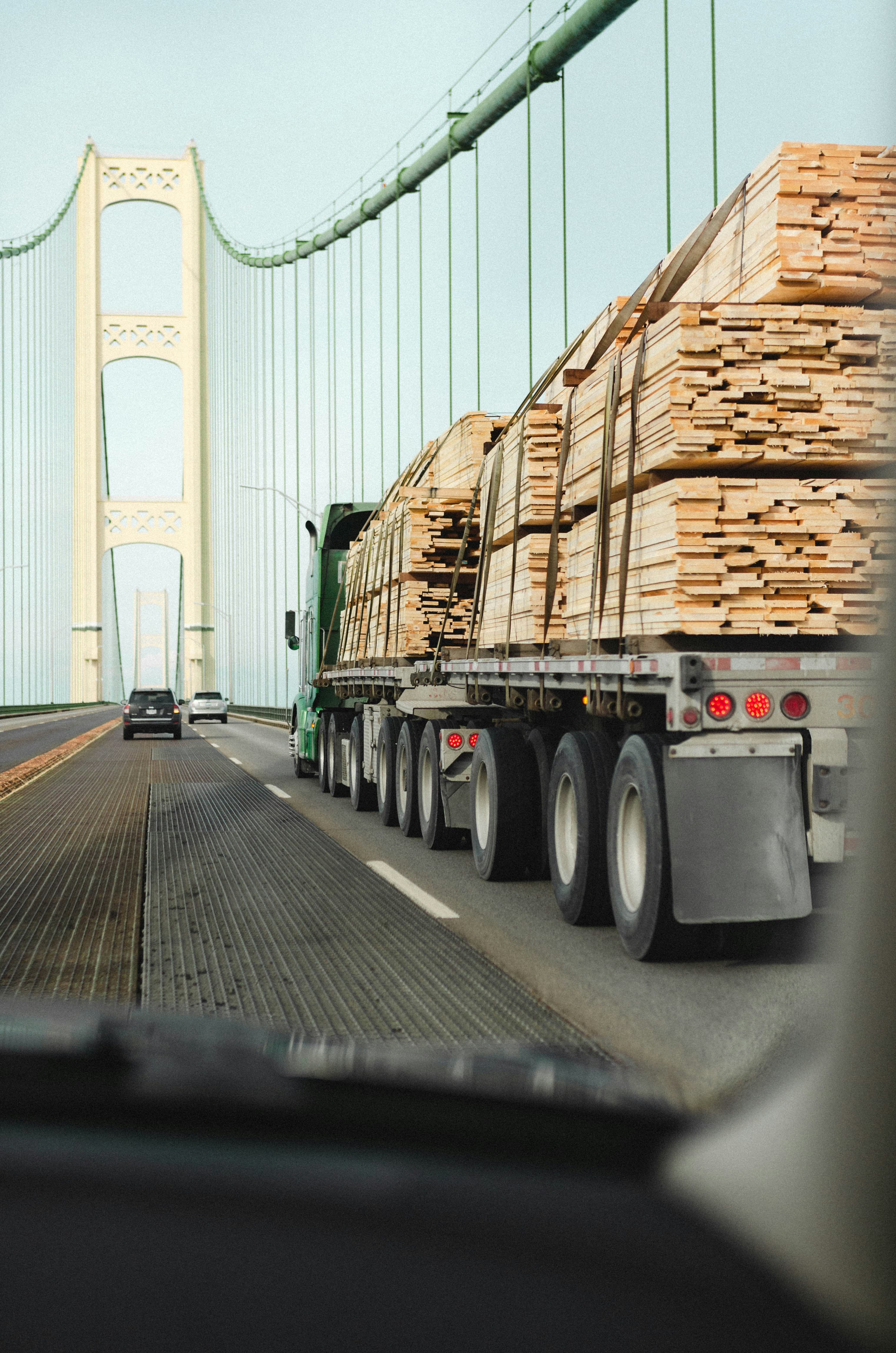
This page is for carriers and owner-operators pulling flatbeds, step decks, double drops, conestogas and stretch trailers: steel, pipe, lumber, building materials, machinery, oilfield equipment, solar and wind components, and project freight. In Texas that often means a mix of plant and yard pickups, job-site deliveries and occasional permitted loads.
If you haul for hire across state lines, the federal minimum under 49 CFR 387.9 is $750,000 of liability for non-hazardous property at 10,001 lbs GVWR or more, filed by your insurer on a BMC-91X. If you run only inside Texas with trucks over 26,000 lbs, TxDMV requires at least $500,000 on a Form E. See the filings guide and federal minimums explained. For heavier and wider work, the heavy haul page goes further.
What brokers and shippers usually check on a flatbed carrier
Carrier onboarding platforms such as RMIS, Highway and MyCarrierPackets pull your authority, your insurance filings and a certificate, then compare them against the broker's requirements. For flatbed freight, the review usually looks at:
- Auto liability limit. Many brokers want more than the federal minimum. See why brokers require $1 million.
- Cargo limit and form. The broker sets a cargo limit, and some freight (steel coils, machinery) comes with a higher limit in the rate confirmation. Federal law only requires cargo security for household goods carriers (49 CFR 387.303(c)), so the cargo number on a flatbed load is a contract term. See how much cargo brokers require.
- Commodity exclusions. A cargo policy that excludes or sublimits what is on the bill of lading is a rejection waiting to happen.
- Scheduled vs any-auto wording. Certificates that list only scheduled units can fail when a broker sees a different tractor at pickup. See scheduled auto vs any auto.
- Safety data. Securement violations show up in roadside inspection records.
When a packet is rejected, it is usually a mismatch, not a missing policy. The carrier packet rejected page covers the common reasons.
Sample trucking certificate: where onboarding fails
- 1Name does not match FMCSA. The certificate says "LLC" but the USDOT record and operating authority say "Inc." Onboarding checks compare the two, including DBAs.
- 2Unit not on the schedule. Auto liability is written on scheduled autos, and the truck dispatched on the load is not on the list. The broker may ask for the VIN to be added.
- 3Cargo limit below the agreement. A $50,000 cargo limit against a broker-carrier agreement that asks for $100,000 fails, however clean the rest is.
- 4Reefer breakdown not shown. A refrigerated carrier with nothing showing reefer breakdown coverage. Many cargo forms leave out spoilage from unit failure unless it is added.
- 5Holder name or address wrong. The broker's legal name or mailing address does not match its setup instructions, so the certificate is sent back.
- 6Policy period expired. Last term's certificate. Dates are the first thing an automated check reads.
- 7Additional insured box without the endorsement. An X under ADDL INSD does not add anyone to the policy. If the agreement asks for it, the policy needs an endorsement.
- 8No cancellation notice to the holder. The standard wording only points to the policy provisions. A promise to notify the holder takes an endorsement on the policy.
What underwriters weigh for open-deck freight
A flatbed account is priced on what you haul and how you secure it as much as on miles and drivers.
- Commodity mix. Coils, machinery, lumber, pipe and building materials have different damage and shift patterns. Federal securement rules have commodity-specific sections for many of them (49 CFR 393.116 through 393.136).
- Securement and tarping practice. Underwriters ask how drivers are trained to secure and tarp, and whether securement equipment is inspected.
- Permitted loads. Oversize or overweight moves require a TxDMV permit before travel through the TxPROS system. Frequent permitted work moves an account toward heavy haul underwriting.
- Trailer arrangements. Owning your decks, pulling customer or pool trailers, or swapping trailers with other carriers all change what physical damage and liability coverage must do.
- Loading and unloading. Who loads, whether drivers operate forklifts or cranes, and whether drivers climb on loads to tarp.
- Inspection and out-of-service history, especially cargo securement and lighting violations. See what an out-of-service rate is.
| Commodity | Section |
|---|---|
| Logs | 393.116 |
| Dressed lumber and similar building products | 393.118 |
| Metal coils | 393.120 |
| Paper rolls | 393.122 |
| Concrete pipe | 393.124 |
| Heavy vehicles, equipment and machinery | 393.130 |
| Large boulders | 393.136 |
Coverage gaps specific to flatbed work
Cargo form conditions and exclusions
Motor truck cargo forms are not standardized. Some exclude or sublimit specific commodities, some exclude damage from improper loading or securement, and many limit damage caused by weather to open loads. Read the cargo form against the commodities you actually book. The motor truck cargo page and what cargo insurance excludes walk through the usual wording.
Rust, water and tarp failures
A load of finished steel that arrives wet can be a claim even if nothing fell off. Whether the cargo policy pays depends on the form's weather and wetting language and whether the load was tarped as the shipper required.
Loading damage at the shipper or receiver
If the shipper's forklift damages the load, cargo coverage may treat it differently than damage in transit. If your driver operates the receiver's equipment, the claim can drift into general liability. Know who loads, and check whether your GL is built for it. See truckers general liability.
Bridge and overpass strikes
Texas Transportation Code 621.207 limits a vehicle and load to 14 feet and makes the owner strictly liable for damage to a bridge, underpass or similar structure caused by the vehicle's height, except when the vehicle was stolen, the posted clearance was wrong, the vehicle was under law enforcement direction, or it was operating under a valid permit. Auto liability normally answers these claims, which can be large. This is a reason an umbrella matters on step deck and machinery freight.
Swapped and borrowed trailers
Damage to a trailer you do not own is not covered by your physical damage on your own units. You need trailer interchange if there is a written interchange agreement, or non-owned trailer coverage otherwise. See trailer interchange vs non-owned trailer.
Where cargo coverage commonly falls short
Texas size and permit points that touch insurance
Texas Transportation Code 621.201 sets a general maximum width of 102 inches, and 621.207 sets 14 feet as the height limit. Section 621.101 caps a single axle at 20,000 lbs, a tandem at 34,000 lbs and gross weight at 80,000 lbs. Loads beyond legal limits need a TxDMV oversize/overweight permit and, where applicable, an authorized route before travel.
Permits do not replace insurance. A permitted move still needs liability, cargo and physical damage that fit the freight, and some contracts for permitted loads add their own insurance terms. If your flatbed work is drifting into regular permitted moves, compare what you carry against the heavy haul page.
Common questions
Is cargo insurance legally required for flatbed carriers?
Not federally for general freight. 49 CFR 387.303(c) requires cargo security from household goods carriers. For a flatbed carrier, the cargo limit comes from the broker or shipper agreement and the rate confirmation, which is why it matters what your cargo form excludes.
Does my cargo policy cover steel coils?
It depends on the form. Some cargo policies exclude or sublimit coils, machinery or other commodities, and some add conditions about securement. Check the commodity section and any schedule before you accept the load, and send us the form if you are not sure.
Who pays if my load hits an overpass in Texas?
Texas Transportation Code 621.207 makes the vehicle owner strictly liable for height damage to a bridge or underpass, with listed exceptions such as an incorrectly posted clearance or a valid permit for the move. Your auto liability is normally the policy that responds to the claim.
I pull a broker's or another carrier's trailer sometimes. Am I covered?
Not by physical damage on your own equipment. You need trailer interchange coverage when there is a written interchange agreement, or non-owned trailer coverage when there is not. Confirm the limit fits the value of the trailers you actually pull.
Do I need a permit for an oversize load in Texas?
Yes. TxDMV says vehicles or loads exceeding legal size or weight limits must have an oversize/overweight permit, and an authorized route where applicable, before traveling on public roads. Permits are issued through TxPROS.
Sources
- 49 CFR 387.9 Financial responsibility, minimum levels. $750,000 federal minimum for for-hire interstate non-hazardous property at 10,001 lbs GVWR or more.
- 49 CFR 387.303 Security for the protection of the public. Paragraph (c): federal cargo security requirement applies to household goods carriers.
- 49 CFR part 393, subpart I (cargo securement). Commodity-specific securement sections 393.116 through 393.136.
- Tex. Transp. Code ch. 621 (Texas Legislature). Sections 621.101 (axle and gross limits), 621.201 (102-inch width) and 621.207 (14-foot height and strict liability for height damage).
- TxDMV: Oversize/Overweight Permits. Permit and route required before travel for loads over legal limits; TxPROS.
- TxDMV: TxDMV Number requirements. $500,000 intrastate minimum for carriers over 26,000 lbs.
This page explains insurance, not law. Have your attorney review indemnity and contract language; our job is making the insurance match it.
Keep reading
Coverage
Motor truck cargo insurance: what it pays, what it leaves out, and what brokers check
Coverage
Trailer interchange insurance: who pays when someone else’s trailer is damaged on your watch
By operation
What insurance does a Texas heavy haul carrier need for oversize and overweight loads?
Contracts and deadlines
The broker rejected our carrier packet because of insurance. What now?
Questions
What does cargo insurance exclude?
Questions
How much cargo insurance do brokers require?