The short version
- Federal minimums for tank carriers depend on the product: $750,000 for non-hazardous property, $1,000,000 for oil and most hazardous materials, and $5,000,000 for certain bulk hazardous materials under 49 CFR 387.9.
- Texas intrastate carriers face the same $1 million and $5 million hazmat tiers in TxDMV's minimum insurance table; non-hazardous carriers over 26,000 lbs need $500,000.
- The MCS-90 endorsement guarantees payment to the public up to the federal minimum, including environmental restoration, but it works on a reimbursement basis: the insurer can seek repayment from you for a claim the policy would not otherwise cover.
- Pollution is the gap that matters most on tankers: standard auto forms exclude it, so carriers usually need a broadened pollution endorsement or a separate transportation pollution policy that fits the products hauled.
Who this page is for
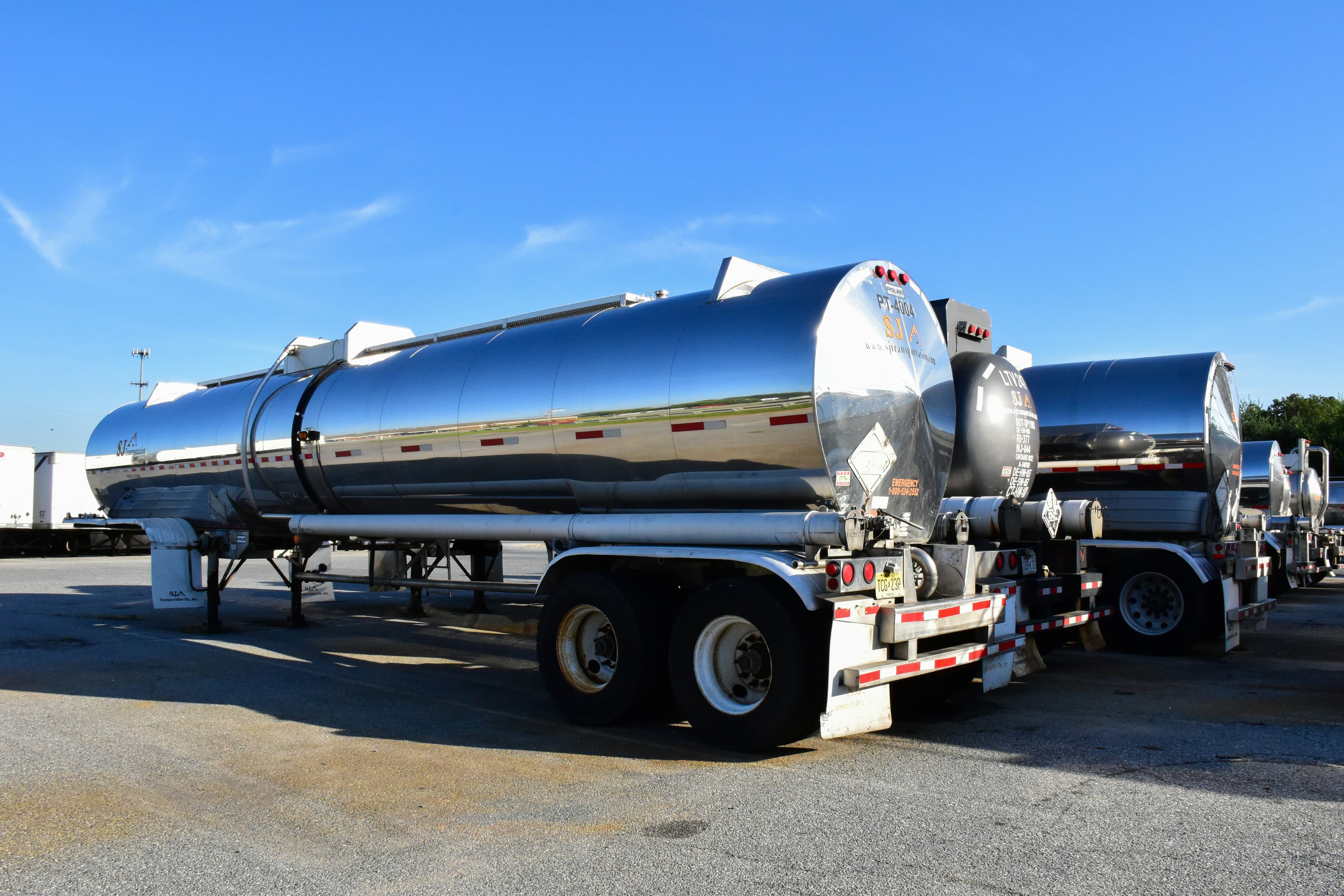
This page is for carriers running cargo tanks: fuel and petroleum products, crude oil, chemicals, liquefied gases, asphalt, dry bulk pneumatic tanks, food-grade liquids and water. In Texas, tank work ranges from fuel delivery to stations and farms, to crude and produced water in the oilfield, to chemical hauling out of the Gulf Coast. For oilfield-specific tank work, see oilfield trucking insurance; for placarded loads generally, see hazmat trucking insurance.
Drivers need the right CDL. Federal rules define a tank vehicle as a commercial motor vehicle designed to carry liquid or gaseous materials in a tank with an individual rated capacity over 119 gallons and an aggregate capacity of 1,000 gallons or more (49 CFR 383.5). Operating one requires the tank vehicle endorsement, and hazardous materials require the hazmat endorsement (49 CFR 383.93). Underwriters check that every listed driver holds what the work requires.
Minimum limits by product
The product in the tank sets the federal floor. The table summarizes 49 CFR 387.9 for vehicles at 10,001 lbs GVWR or more. Texas intrastate carriers follow TxDMV's table, which uses the same $5,000,000 and $1,000,000 tiers for hazmat and oil and $500,000 for other carriers over 26,000 lbs.
These are minimums for the auto liability policy. Shippers, terminals and refineries commonly require higher limits plus an umbrella or excess, and some require pollution coverage with its own limit. See federal minimums explained and the trucking umbrella page.
| What is in the tank | Type of carriage | Federal minimum |
|---|---|---|
| Non-hazardous property (e.g. water, food-grade liquids) | For-hire, interstate or foreign | $750,000 |
| Oil listed in 49 CFR 172.101, hazardous waste, hazardous materials and substances not in the $5M tier | For-hire and private; interstate in any quantity, intrastate in bulk only | $1,000,000 |
| Certain hazardous materials in bulk (e.g. Division 2.1 or 2.2 gases, Division 1.1 to 1.3 explosives, Zone A toxic inhalation hazards) in cargo tanks, portable tanks or hoppers | For-hire and private; interstate, foreign or intrastate | $5,000,000 |
How a trucking liability tower stacks
What MCS-90 does and does not do
For-hire carriers and hazmat carriers subject to 49 CFR 387 must have the MCS-90 endorsement on their auto liability policy. The endorsement guarantees payment of final judgments for public liability up to the federal minimum, and public liability under the form includes environmental restoration.
IRMI describes the key point plainly: the MCS-90 does not actually provide insurance except on a reimbursement basis. If a claim would be covered by the policy anyway, the endorsement has no practical effect. If the policy would not cover it (for example, a pollution exclusion or an unlisted driver), the insurer pays the injured public and can then seek repayment from the carrier. For a tanker, where a spill can produce cleanup costs, that reimbursement exposure is real money. See what is MCS-90.
What underwriters weigh on tank accounts
- Product classes. Gasoline and diesel, crude, corrosives, compressed gases and food-grade liquids are rated very differently.
- Bulk vs packaged. Bulk tank loads move the account into the higher federal tiers and raise spill severity.
- Loading and unloading. Rack loading at terminals, delivery into underground storage tanks and transloading each carry their own spill and fire exposure.
- Tank equipment. Tank specification, inspection and test records, and the age of tractors and trailers.
- Driver experience in tanks. Liquid surge and rollover risk make tank-specific experience a central underwriting question. See can new CDL drivers get insured.
- Terminal and shipper agreements, which often require the carrier to carry pollution coverage and indemnify the terminal.
Coverage gaps that are specific to tankers
Pollution and cleanup
Standard commercial auto forms exclude pollution. IRMI notes that the CA 99 48 broadened pollution endorsement modifies that exclusion but does not remove it entirely. Many tank carriers therefore buy a separate transportation pollution liability policy that addresses cleanup costs, spills during loading and unloading, and pollution away from the vehicle. See truck pollution liability.
Contamination of the cargo
Mixing products, a dirty tank or a wrong compartment can ruin a load without any accident. Many cargo forms limit or exclude contamination, and some tank carriers carry little cargo coverage at all. If the shipper agreement makes you liable for product, check the cargo form.
Delivery and loading damage
Overfilling a customer's tank or damaging their equipment during unloading can fall between auto (loading and unloading) and general liability. Know where your policies draw the line. See truckers general liability.
Indemnity in terminal access agreements
Terminals and plants often require broad indemnity. Texas Transportation Code 623.0155 limits indemnity demands made on a motor carrier as a condition of entering property to load or unload, but not for the carrier's own negligence. Have an attorney review the agreement before signing.
Food-grade tanks
Food-grade liquid tankers may fall under FDA's sanitary transportation rule, which adds cleaning and record terms to many shipper agreements.
Common questions
How much liability insurance does a fuel tanker need?
Under 49 CFR 387.9, oil and most hazardous materials carry a $1,000,000 federal minimum, and certain bulk hazardous materials carry $5,000,000. Which tier applies depends on the product's hazard class and whether it moves in bulk. Texas intrastate carriers face the same tiers in TxDMV's table. Shippers often require more.
Does my auto policy cover a fuel spill?
Usually only partly. Standard auto forms exclude pollution; endorsements such as CA 99 48 broaden that, and the MCS-90 guarantees payment to the public for environmental restoration up to the federal minimum, with a right for the insurer to seek reimbursement from you. A separate transportation pollution policy is the common answer.
What CDL endorsements do tanker drivers need?
A driver operating a tank vehicle as defined in 49 CFR 383.5 needs the tank vehicle endorsement, and a driver hauling placarded hazardous materials needs the hazmat endorsement (49 CFR 383.93). Your insurer will check that every listed driver holds them.
I haul only water. Do I still need a tank endorsement?
The tank vehicle definition is about the vehicle and tank capacity, not the product: more than 119 gallons in an individual tank and 1,000 gallons or more in aggregate. A water tanker that meets that definition is a tank vehicle. Liability minimums for non-hazardous water follow the non-hazardous tier.
What is the MCS-90 reimbursement clause?
If the insurer pays a claim only because of the MCS-90 (the policy itself would not have covered it), the endorsement lets the insurer seek repayment from the carrier. It protects the public, not the carrier.
Sources
- 49 CFR 387.9 Financial responsibility, minimum levels. $750,000, $1,000,000 and $5,000,000 tiers by commodity and type of carriage.
- TxDMV: TxDMV Number requirements. Texas intrastate minimum insurance table: $5M and $1M hazmat tiers, $500,000 over 26,000 lbs.
- IRMI glossary: MCS-90 endorsement. Reimbursement basis; environmental restitution; CA 99 48 broadened pollution endorsement.
- 49 CFR 383.5 Definitions. Tank vehicle definition (over 119 gallons individual, 1,000 gallons aggregate).
- 49 CFR 383.93 Endorsements. Tank vehicle and hazardous materials endorsements.
- Tex. Transp. Code ch. 623 (Texas Legislature). Section 623.0155: limits on indemnity demanded from motor carriers.
This page explains insurance, not law. Have your attorney review indemnity and contract language; our job is making the insurance match it.
Keep reading
By operation
What insurance does a Texas hazmat carrier need?
Coverage
Truck pollution liability: when a spill is covered and when it is yours
By operation
What insurance does a Texas oilfield trucking company need?
Questions
What is the MCS-90 endorsement?
Questions
What are the FMCSA minimum insurance limits for trucks?
Coverage
Trucking umbrella and excess liability: the limits above your primary auto policy