The short version
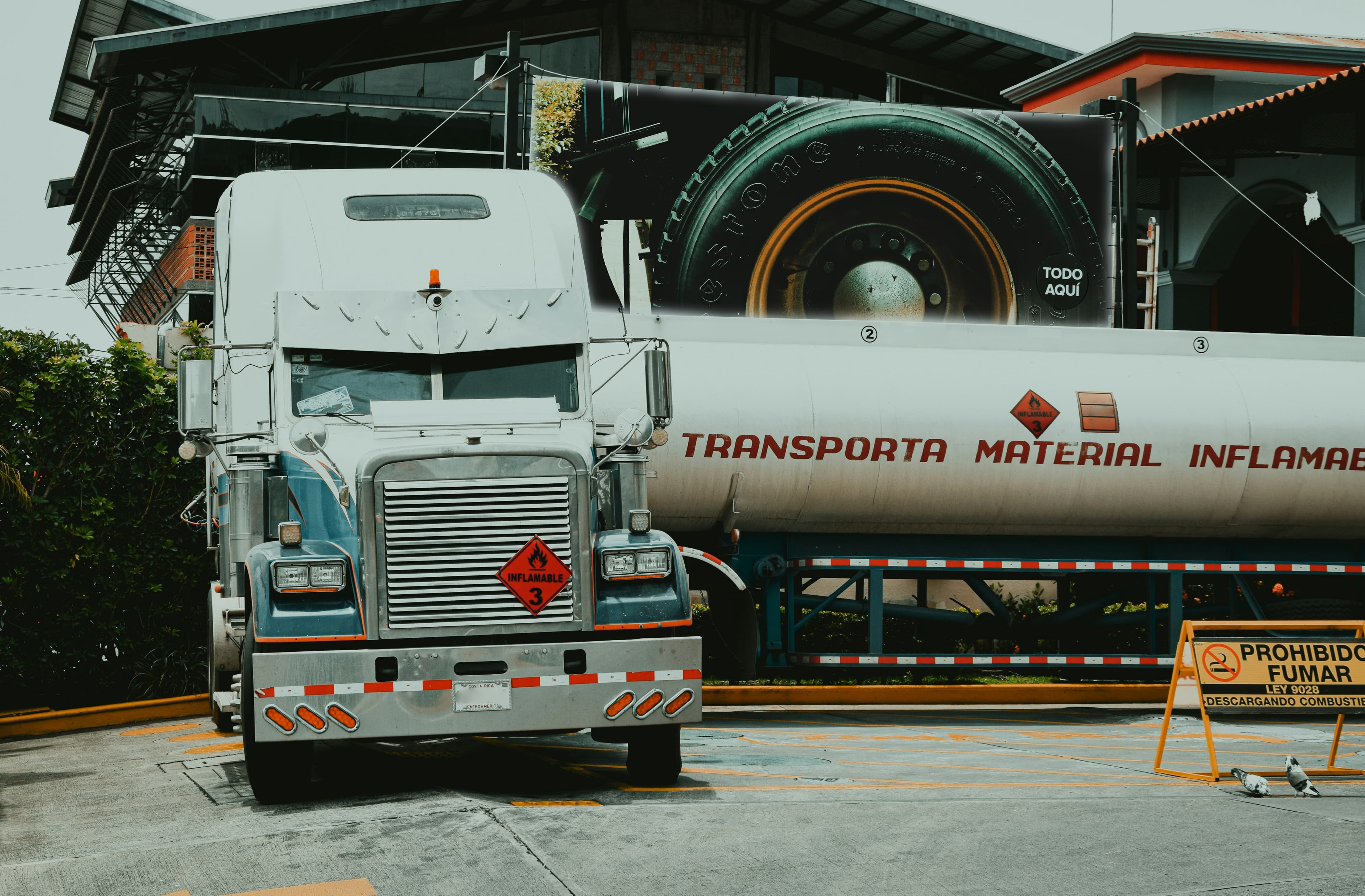
- The standard ISO motor carrier and business auto forms exclude pollution from the cargo you are hauling, before you load it, and after you deliver it. A tanker spill of the load is generally excluded unless you add coverage.
- The exclusion does not apply to the truck's own fuel, lubricants and fluids escaping from the part designed to hold them. A ruptured saddle tank after a wreck is usually covered.
- The CA 99 48 broadened pollution endorsement adds back pollution from cargo in transit, including cleanup demands from government agencies.
- The MCS-90 makes the insurer pay public liability judgments, which federal rules define to include environmental restoration, but you must reimburse the insurer for anything the policy did not otherwise cover.
How the auto pollution exclusion works
Your auto policy covers bodily injury, property damage and certain pollution cleanup costs caused by an accident. Then it takes a lot of pollution away.
On the ISO Motor Carrier Coverage Form (CA 00 20), the pollution exclusion removes injury or damage arising from the discharge or release of pollutants:
- that are, or are contained in, property being transported or towed by, handled for movement into, onto or from, the covered auto, or otherwise in the course of transit by or on behalf of the insured, or stored, disposed of, treated or processed in or on the covered auto;
- before the pollutants are moved from the place where you accepted them for loading; or
- after they are moved off the covered auto to the place where they are finally delivered, disposed of or abandoned.
The form also covers "covered pollution cost or expense," meaning cleanup and response costs demanded by a government or required by statute, but only if there is also covered bodily injury or property damage from the same accident.
So in plain terms: if your load is a pollutant and it gets out, the basic auto policy is not built to pay for it. The form defines pollutants broadly as any solid, liquid, gaseous or thermal irritant or contaminant, so diesel, crude, chemicals and fertilizer all qualify.
| Spill | Standard CA 00 20 / CA 00 01 | With CA 99 48 |
|---|---|---|
| Saddle tank ruptures in a wreck, diesel on the highway | Generally covered (own fuel exception) | Covered |
| Tanker load of crude released in a rollover | Excluded (cargo in transit) | Generally covered |
| Hose fails while unloading at the customer’s tank | Excluded | Depends on wording; loading and unloading limits apply |
| Spill at your own yard while transferring product | Excluded | Depends on facts; before-loading limits apply |
| Overturn of an off-premises container by your truck | Exception may restore coverage | Covered |
What stays covered without an endorsement
Two exceptions keep the basic form from being useless for ordinary truck accidents.
The truck's own fluids. The cargo part of the exclusion does not apply to fuels, lubricants, fluids, exhaust gases or similar pollutants needed for or resulting from the normal functioning of the covered auto, if they escape directly from a part designed by its manufacturer to hold them. A punctured fuel tank or a cracked oil pan after a wreck is the classic example. The exception does not apply to pollution from operating certain equipment mounted on the truck.
Upset or overturn away from your premises. The before-loading and after-delivery parts of the exclusion do not apply to accidents away from premises you own or rent involving pollutants not in or on a covered auto, if the pollutants or their container are upset, overturned or damaged because of the maintenance or use of the covered auto and that causes the release. If your truck backs into a customer's fuel tank away from your yard, this exception may respond.
These exceptions are narrow. They are not a substitute for cargo pollution coverage if you haul fuel, chemicals or anything else that is a pollutant.
The CA 99 48 broadened pollution endorsement
ISO's CA 99 48 (Pollution Liability: Broadened Coverage for Covered Autos, for the business auto and motor carrier forms) is the standard fix for haulers of pollutants. It changes the exclusion so that the transported-pollutant part applies only to liability assumed under a contract, removes the care, custody or control exclusion for that restored coverage, and redefines covered pollution cost or expense so that cleanup demands and government suits are covered for pollutants in transit.
It still does not cover pollutants before they are moved onto the auto or after they are moved off to final delivery, except for an off-premises accident that upsets or overturns the container.
Who usually needs it: fuel and propane haulers, chemical and fertilizer tankers, waste haulers, and anyone hauling placarded hazardous materials. See hazmat trucking insurance, tanker truck insurance and oilfield trucking insurance.
For losses during loading and unloading at a customer's facility, or at your own yard, ask about a separate transportation pollution or contractors pollution policy. Those are insurer-specific forms; read the coverage triggers and the definition of transit.
The MCS-90, environmental restoration, and higher federal limits
Federal rules define public liability to include liability for environmental restoration, and define environmental restoration as restitution for the loss, damage or destruction of natural resources arising from the accidental discharge or release of any commodity transported by a motor carrier (49 CFR 387.5). The MCS-90 obligates the insurer to pay final judgments for public liability, up to the required amount, even when the policy would not otherwise cover the claim.
That sounds like pollution coverage. It is not, for you. IRMI explains that the MCS-90 does not actually provide insurance except on a reimbursement basis. If your policy excludes the spill and the insurer pays under the MCS-90, you owe the insurer that money. IRMI also notes that CA 99 48 modifies the auto pollution exclusion without deleting it.
The federal minimums are also higher for many pollutants. Under 49 CFR 387.9, for-hire carriers hauling oil or most hazardous materials in vehicles of 10,001 pounds or more need $1,000,000, and certain bulk hazardous materials require $5,000,000. TxDMV's intrastate minimums are $1,000,000 for oil and certain hazardous materials and $5,000,000 for placarded hazardous materials. See FMCSA truck insurance minimums.
How a trucking liability tower stacks
Texas spill reporting and why it matters to the claim
Texas has its own reporting rules for spills. Under 30 TAC 327.3, the responsible person must report a reportable discharge or spill to the state as soon as possible but not later than 24 hours after discovery, through the State Emergency Response Center, the TCEQ regional office during business hours, or the agency's 24-hour spill line. Under 30 TAC 327.4, the reportable quantity for petroleum product spilled onto land is 25 gallons, and 210 gallons (five barrels) for crude oil onto land; for either, a spill directly into state waters is reportable at a quantity sufficient to create a sheen. A single ruptured saddle tank can exceed that.
Reporting to the state is not notice to your insurer. Your policy has its own notice conditions, and pollution coverage is often where insurers enforce them most strictly. Report to both, in writing, and keep the confirmation. Have an environmental attorney advise on your reporting duties after a significant release.
Check this first
Find the pollution exclusion in your auto policy and look for CA 99 48 or an equivalent endorsement on the forms schedule. If you haul fuel, chemicals or waste and it is not there, your load is likely excluded.
Common questions
Does my truck insurance cover a fuel spill?
If the fuel came from your truck's own tank after an accident, the standard auto form generally covers it. If the fuel was your cargo, the standard pollution exclusion generally removes it unless you have the CA 99 48 broadened pollution endorsement or similar coverage.
What does CA 99 48 do?
It broadens the auto pollution coverage so pollutants being transported are covered, including government cleanup demands, subject to limits around loading and delivery.
Is the MCS-90 pollution insurance?
No. It makes the insurer pay public liability judgments, including environmental restoration, up to the federal minimum, but you must reimburse the insurer for any payment your policy would not otherwise have made.
How fast do I have to report a diesel spill in Texas?
Under 30 TAC 327.3, a reportable spill must be reported as soon as possible and no later than 24 hours after discovery. For petroleum product onto land, the reportable quantity is 25 gallons. You also need to notify your insurer under the policy's terms.
What liability limit do I need to haul fuel?
Federal rules require $1,000,000 for oil and most hazardous materials in vehicles of 10,001 pounds or more, and $5,000,000 for certain bulk hazardous materials. TxDMV has similar intrastate amounts. Contracts may require more.
Sources
- IRMI: MCS-90 endorsement. MCS-90 provides insurance only on a reimbursement basis; CA 99 48 modifies but does not delete the pollution exclusion.
- 49 CFR 387.5: Definitions. Public liability includes environmental restoration; definition of environmental restoration.
- 49 CFR 387.9: Financial responsibility, minimum levels. $1,000,000 and $5,000,000 minimums for oil and hazardous materials.
- 30 Tex. Admin. Code 327.3 and 327.4. Reportable quantities (25 gallons petroleum product on land; 210 gallons crude on land); 327.3 sets the 24-hour reporting deadline.
- TxDMV: TxDMV number requirements. Texas intrastate minimums for oil and placarded hazardous materials.
This page explains insurance, not law. Have your attorney review indemnity and contract language; our job is making the insurance match it.
Keep reading
By operation
What insurance does a Texas hazmat carrier need?
By operation
What insurance does a Texas tanker operation need?
By operation
What insurance does a Texas oilfield trucking company need?
Questions
What is the MCS-90 endorsement?
Coverage
Primary truck liability: what it covers, what the law requires, and where it breaks
Questions
What are the FMCSA minimum insurance limits for trucks?