The short version
- Ector County is in Railroad Commission District 08, the same district as Midland. In July 2026 the district led Texas with 275 permits to drill new holes and 360 new oil completions.
- Odessa trucking is weighted toward oilfield work: water, sand, pipe, rig and equipment moves. Those loads need pollution and contract coverage that general freight policies often leave out.
- Oversize and overweight loads need a TxDMV permit before they move on Texas roads, and superheavy permits apply above 254,300 lbs gross (or 200,000 lbs with less than 95 feet of axle spacing).
- The most common gap we see is a mismatch between the company on the MSA, the RRC P-5, the USDOT number and the insurance policy.
Odessa and the Permian
The RRC places Ector County in District 08, administered from the Midland office. District 08 led the state in the RRC's July 2026 statistics with 275 permits to drill new holes, 360 new oil completions and 72 new gas completions. That activity is why so many trucking and oilfield service yards sit along I-20 and US 385 around Odessa.
Odessa and Midland share a market, and many Odessa operations are equipment- and yard-heavy: rig moving, fabrication shops, tank and pipe yards and the trucks that serve them. If you also run out of Midland, see Midland trucking insurance.
Common Odessa trucking operations
What an underwriter wants to see on an Odessa application is a clear description of each operation, because they rate very differently:
| Operation | Main exposure | Where to read more |
|---|---|---|
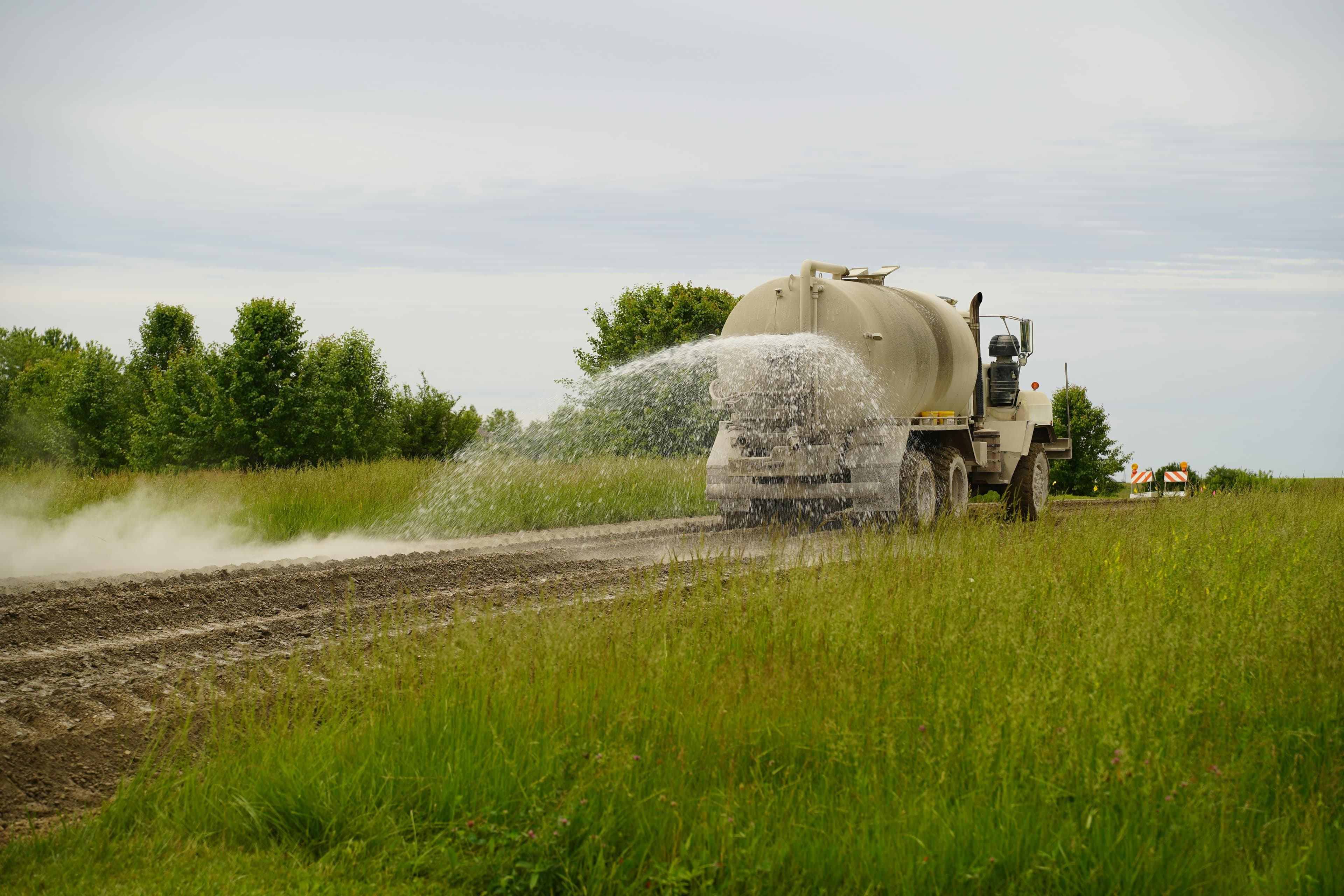
| Water and vacuum trucks | Spills, rollovers, lease roads | Oilfield trucking, pollution |
| Crude and condensate | Hazmat limits, tanker rollover | Tanker, hazmat |
| Frac sand | High cycle count, shared roads | Dump truck |
| Pipe, tubulars, equipment | Load securement, oversize | Flatbed, heavy haul |
| Hotshot | Light trucks, long miles, many owner-ops | Hotshot |
One policy can often cover several of these, but only if each is disclosed. A water hauler who quietly adds crude loads has changed the risk the carrier priced.
Permits that touch your insurance
Two state permits come up constantly for Odessa trucking companies:
- RRC waste hauler permit. Required to transport non-hazardous oil and gas waste for hire off the property where it was generated. You need an active Form P-5, and the permit renews annually.
- TxDMV oversize/overweight permits. Loads over legal size or weight need an OS/OW permit before they travel on Texas public roads. TxDMV issues them through its TxPROS system, and superheavy permits cover non-divisible loads over 254,300 lbs gross, or 200,000 lbs with less than 95 feet of axle spacing.
Both permits are issued to a named company. That name should match the named insured on your auto policy and the filing your insurer makes with FMCSA or TxDMV. See FMCSA and TxDMV insurance filings.
Which filing goes where
New Mexico runs make you interstate
Odessa is about an hour from the New Mexico line, and a lot of Permian work is on the New Mexico side of the Delaware Basin. A truck that crosses into New Mexico for hire, even once, is operating in interstate commerce. That changes the paperwork:
- You need a USDOT number and, for most for-hire carriers, operating authority with FMCSA.
- Your insurer files a BMC-91X with FMCSA, and the policy carries the MCS-90.
- Liability must meet 49 CFR 387.9: $750,000 for general freight, $1,000,000 for oil and certain listed hazardous materials.
- Most interstate carriers also register under UCR.
A Texas-only Form E does not cover interstate trips. If your trucks cross the line, tell your agent before they go.
Lease-road and weather losses
Most Odessa truck claims are not interstate crashes. They are rollovers on soft caliche shoulders, backing into equipment on location, a truck sliding off a muddy road after a storm, or hitting a deer, cow or feral hog on an unlit ranch road at night. West Texas also brings sudden dust storms that drop visibility to near zero on I-20 and county roads.
These are frequency losses, and frequency is what moves Permian renewals. The fixes are operational: speed limits on lease roads, backing rules, camera footage and driver qualification. See how do CSA scores affect truck insurance and what drivers can trucking insurance cover.
Common questions
Is a hotshot truck hauling oilfield parts covered the same as a semi?
It needs the same kinds of coverage, but it is often rated differently. If the hotshot is under 10,001 lbs GVWR or carries only certain loads, the filing requirements can change too. Disclose the GVWR, trailer and what you haul.
What should my certificate show for an operator MSA?
Usually additional insured status, waiver of subrogation and primary and non-contributory wording on the policies the MSA names, plus limits that match the exhibit. The policy has to contain the endorsements; a certificate alone does not create coverage.
Does a dust storm crash count as an at-fault accident?
Fault depends on the facts, not the weather. A driver who keeps going at highway speed into zero visibility can be found at fault. A dashcam and a clear company policy on stopping in dust help a lot.
Sources
- RRC: Oil and gas counties and districts. Ector County in District 08, Midland office.
- RRC: Drilling permit and completion statistics, July 2026. District 08 permits and completions.
- RRC: Waste hauler permits. Waste hauler permit requirements and annual renewal.
- TxDMV: Oversize/overweight permits. OS/OW permit requirement, TxPROS and superheavy thresholds.
- 49 CFR 387.9 (Cornell LII). $750,000 and $1,000,000 federal minimums for interstate trips.
This page explains insurance, not law. Have your attorney review indemnity and contract language; our job is making the insurance match it.
Keep reading
By operation
What insurance does a Texas oilfield trucking company need?
By operation
What insurance does a Texas heavy haul carrier need for oversize and overweight loads?
Coverage
Truck pollution liability: when a spill is covered and when it is yours
Contracts and deadlines
Which insurance filings does a Texas trucking company need, and who files them?
Locations
What do Midland trucking companies need from their insurance?