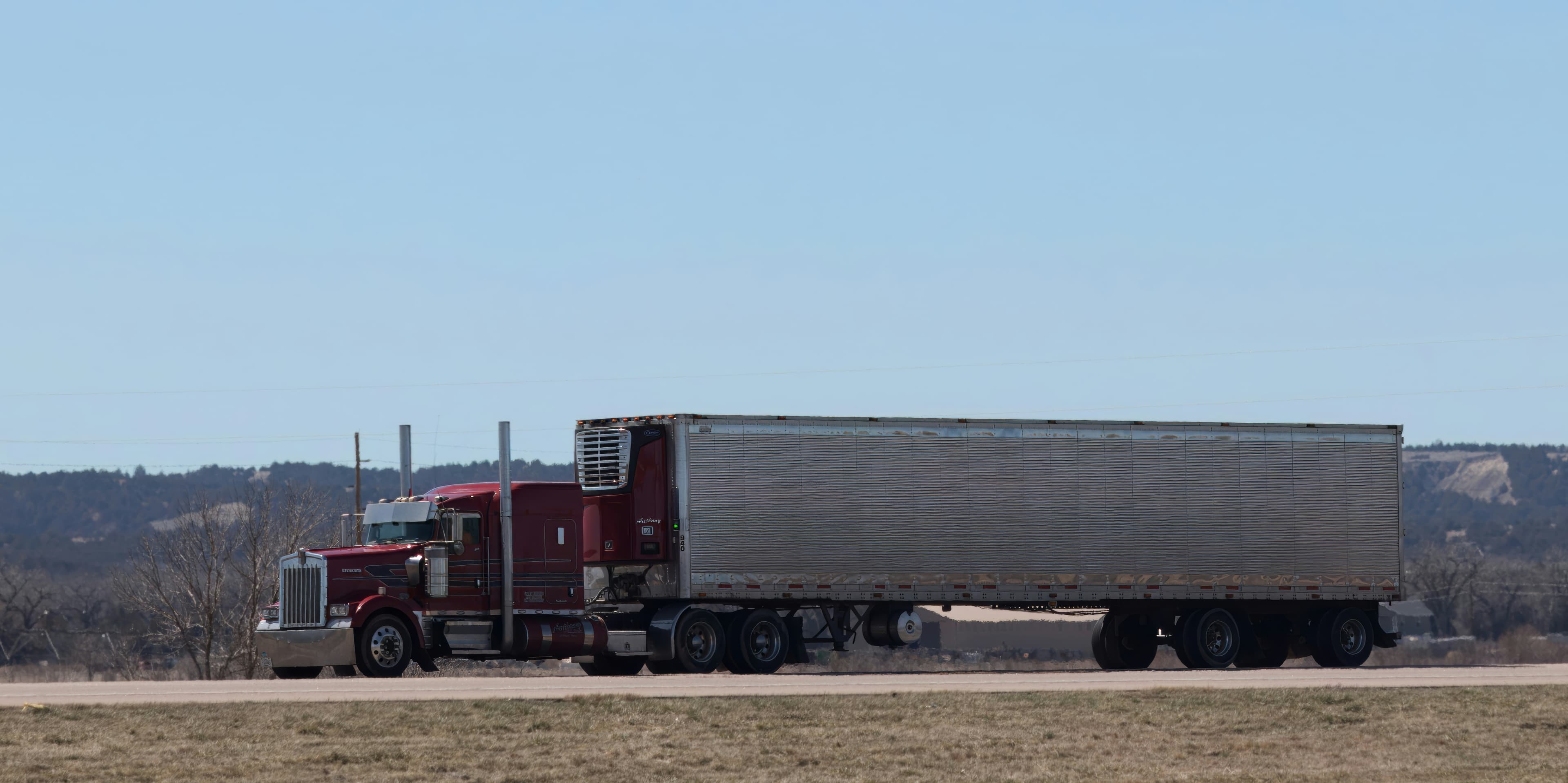
The short version
- Reefer breakdown is usually an endorsement to a motor truck cargo policy. It pays for spoilage of temperature-controlled freight caused by a covered breakdown of the refrigeration unit.
- It does not repair the reefer unit. Physical damage policies also exclude loss due and confined to mechanical or electrical breakdown, so a unit failure with no other cause is a maintenance cost.
- Endorsements differ on what counts as a breakdown, whether driver error or wrong temperature settings are covered, and how long the unit must have failed. Records of setpoints, fuel and pre-cooling decide many claims.
- Under the FDA sanitary transportation rule, a carrier that agrees in writing to handle temperature control must pre-cool as specified and, on request, show it maintained temperature during the trip.
Why a cargo policy alone may not cover a spoiled reefer load
A refrigerated load can be ruined without any accident. The unit stops cooling, the product warms, and the receiver rejects it. Nothing crashed, nothing burned, nobody stole anything.
Many motor truck cargo forms exclude or limit loss caused by temperature change, spoilage, or mechanical breakdown of refrigeration equipment unless an endorsement adds it back. That endorsement is what the industry calls reefer breakdown. Brokers hauling food and other perishables commonly ask carriers to show it on the certificate. See reefer trucking insurance and motor truck cargo insurance.
Reefer breakdown covers the freight. It does not pay to repair or replace the reefer unit itself. Under the ISO motor carrier physical damage wording, loss "due and confined to" wear and tear or mechanical or electrical breakdown is excluded. A reefer unit that simply fails is a maintenance cost unless your policy or an equipment breakdown endorsement says otherwise.
Where cargo coverage commonly falls short
What reefer breakdown endorsements usually address
There is no standard ISO reefer breakdown form. Each cargo insurer writes its own, and the wording decides the claim. These are the provisions to read.
Definition of breakdown. Many endorsements require a sudden and accidental mechanical or electrical failure of the unit. Some cover only failure of the unit itself, not of a door seal, a power cord at a shipper's plug-in, or the trailer's insulation.
Minimum duration. Some endorsements cover spoilage only if the unit was inoperative for a minimum number of hours. A short failure that still ruins a sensitive load may not qualify.
Operator error and settings. Wrong setpoints, continuous vs start-stop mode, running out of fuel, or failing to pre-cool are common reasons claims are denied. Some endorsements exclude these; some cover them for a higher deductible.
Maintenance records. Some endorsements require that the unit was maintained on a schedule, and the insurer may ask for service records and the unit's download.
Deductible. Reefer breakdown often carries its own deductible, separate from the cargo deductible.
Rejected loads. A receiver can reject a load for a temperature excursion even when the product is not actually spoiled. Whether the policy pays for a rejected load, salvage, or disposal, and how it handles the difference between rejection and damage, varies by form.
| Provision | What to look for | Common claim problem |
|---|---|---|
| Breakdown definition | Sudden and accidental failure of the unit; what parts count | Door seals, power supply or insulation failures left out |
| Minimum hours inoperative | Any time threshold | Short failures on sensitive freight not covered |
| Operator error | Wrong setpoint, mode, or running out of fuel | Excluded or subject to a higher deductible |
| Records | Download, setpoint, pre-cool and service records | No proof of temperature at pickup |
| Rejected loads | Covered rejection vs actual spoilage | Receiver rejects on a reading, insurer disputes damage |
| Deductible | Separate reefer deductible | Higher than expected out of pocket |
FDA sanitary transportation duties and your records
For food, the FDA's sanitary transportation rule (21 CFR part 1, subpart O) assigns duties based on what shippers and carriers agree to in writing. Where a carrier takes on responsibility for sanitary conditions, 21 CFR 1.908(e) requires it to:
- make sure its vehicles and equipment meet the shipper's specifications;
- pre-cool each mechanically refrigerated cold storage compartment as the shipper specifies before offering the vehicle for loading;
- on request, give the receiver the shipper's specified operating temperature; and
- on request, demonstrate that it maintained temperature conditions during the trip, by any appropriate means agreeable to the carrier and shipper.
The carrier must also have written procedures for cleaning, sanitizing if necessary, inspecting equipment, and meeting the temperature control provisions.
These are regulatory duties, not insurance terms. But they create the same records an insurer will ask for after a spoilage claim: the setpoint the shipper gave you, proof of pre-cooling, and a temperature download for the trip. A carrier that can produce them is in a far better position on a claim, with the shipper, and with the broker. Have an attorney advise on your FDA obligations.
Parked trailers and the gap between policies
Reefer losses do not always happen on the road. A loaded reefer trailer sitting at a yard or a customer's dock can fail too, and the question becomes which policy, if any, responds.
A 2022 Fifth Circuit decision applying Texas law shows how this goes wrong. A San Antonio food company stored product in a reefer trailer parked at its own premises because its warehouse was full. The unit failed and the product spoiled. Its equipment breakdown policy excluded equipment "mounted on or used solely with any vehicle," and the court held that a reefer trailer is a vehicle even when it is detached from a tractor, so there was no coverage under that policy. (The opinion is unpublished and the claim under a separate cargo policy was not before the court.)
For a carrier, the lesson is to ask your cargo insurer directly how long loaded trailers are covered while parked at your yard, at a drop lot or at a customer's dock, and whether reefer breakdown applies while the trailer is not in transit. See the unattended vehicle exclusion for a related condition.
Check this first
For your next reefer load, save the rate confirmation setpoint, a pre-cool reading, and the unit download at delivery. If you cannot pull a download from your units today, fix that before your first spoilage claim.
Common questions
What is reefer breakdown coverage?
An endorsement, usually on a motor truck cargo policy, that pays for spoilage of temperature-controlled freight caused by a covered mechanical or electrical breakdown of the refrigeration unit.
Does reefer breakdown pay to fix the reefer unit?
No. It covers the spoiled freight. Standard physical damage excludes loss due and confined to mechanical or electrical breakdown, so routine unit failure is a maintenance cost unless you have separate equipment coverage.
Is driver error covered under reefer breakdown?
It depends on the endorsement. Wrong setpoints, the wrong mode, running out of fuel or failing to pre-cool are excluded on some forms and covered on others, sometimes with a higher deductible.
Does my cargo policy cover a load the receiver rejected for temperature?
Only if your endorsement covers that situation. Some forms pay only for actual spoilage. Temperature records from pickup through delivery are what support the claim.
Sources
- 21 CFR 1.908: Requirements for shippers, loaders, receivers and carriers. Paragraph (e): carrier pre-cooling, temperature demonstration on request, and written procedures.
- U.S. Court of Appeals, Fifth Circuit, No. 21-51033 (2022, unpublished). Reefer trailer held to be a vehicle; equipment breakdown policy excluded spoilage from a unit mounted on it.
- IRMI: Motor truck cargo (MTC). Cargo is an inland marine form whose coverage depends on the form used.
This page explains insurance, not law. Have your attorney review indemnity and contract language; our job is making the insurance match it.
Keep reading
By operation
What insurance does a Texas reefer carrier need?
Coverage
Motor truck cargo insurance: what it pays, what it leaves out, and what brokers check
Questions
What does cargo insurance exclude?
Questions
How much cargo insurance do brokers require?
Contracts and deadlines
The broker rejected our carrier packet because of insurance. What now?