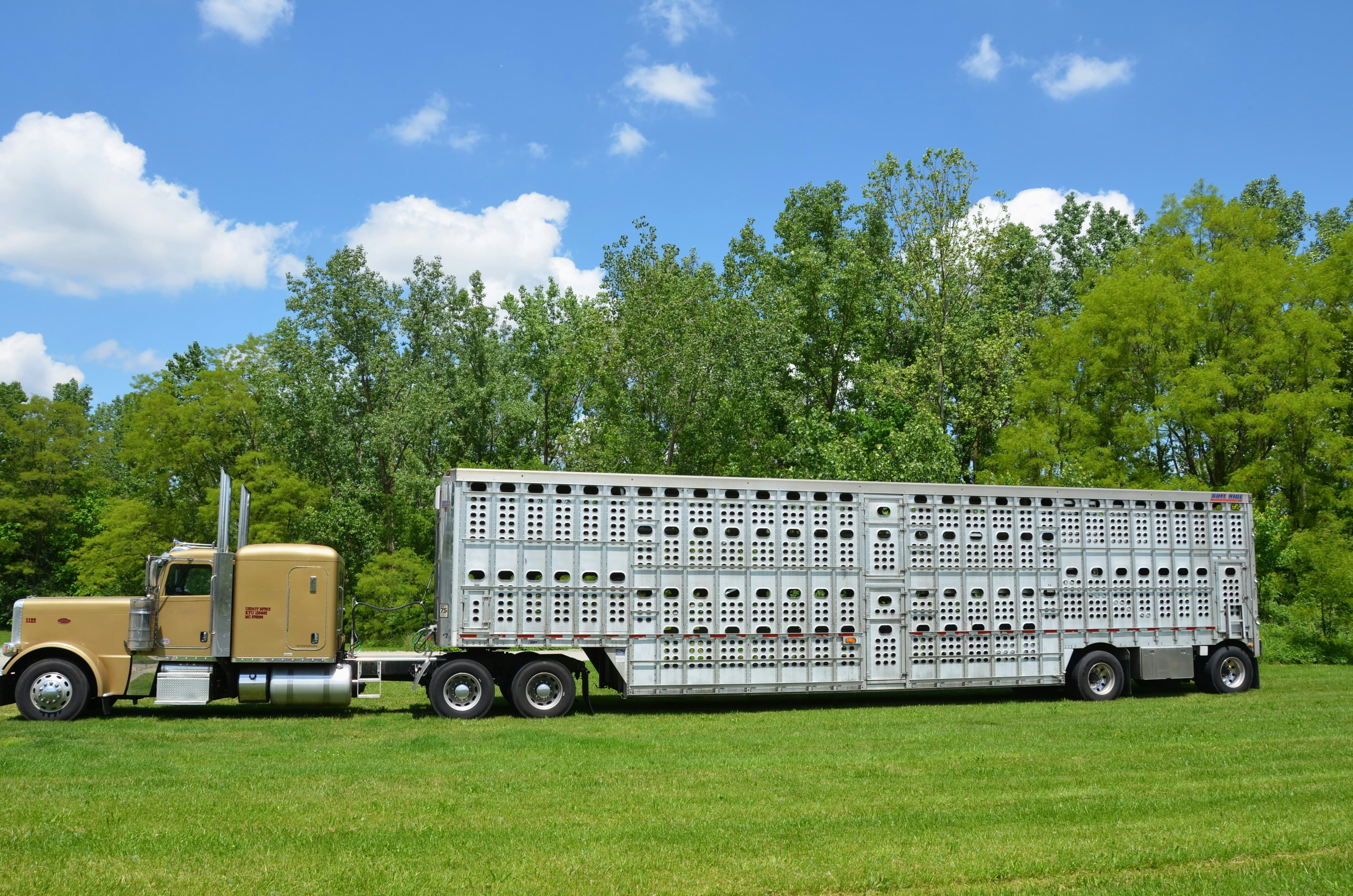
The short version
- Hauling ordinary livestock is exempt from FMCSA operating authority under 49 U.S.C. 13506, but the federal financial responsibility rules in 49 CFR Part 387 still apply to for-hire interstate property carriers, so plan on at least $750,000 auto liability.
- Standard motor truck cargo forms often exclude live animals, so livestock haulers need a livestock cargo form or endorsement, and the key question is which causes of death it pays for.
- Livestock cargo coverage commonly pays for death or injury caused by named perils such as collision, overturn or fire, and commonly does not pay for death from heat, suffocation, trampling or natural causes unless the policy says so.
- The federal 28-hour law limits how long animals can be confined in a vehicle without unloading for feed, water and at least five hours of rest.
Who this page is for
This page is for Texas carriers hauling cattle, hogs, sheep, goats or horses for hire: pot (possum-belly) trailer operators running sale barn to feedyard, ranchers who haul neighbors' cattle for pay, and horse transporters. For local context, see the Amarillo and Lubbock pages.
If you only haul your own animals in your own trailer, you are a private carrier and the conversation is different. This page is about hauling for others.
Livestock cargo and mortality
Livestock is the cargo, and it is alive. That changes how cargo insurance works. Many standard motor truck cargo forms exclude live animals outright, so a livestock hauler needs either a livestock-specific cargo form or an endorsement that adds animals back.
The key question on any livestock cargo coverage is what kind of death it pays for. Coverage is commonly written for death or injury caused by specific perils, and forms differ. Ask your agent to show you, in the policy, how each of these is handled:
| Cause of loss | How forms commonly treat it | What to confirm |
|---|---|---|
| Collision or overturn | Commonly covered, including animals that must be destroyed | Whether humane destruction after an accident is included |
| Fire | Commonly covered | Whether it includes fire in the tractor spreading to the trailer |
| Heat stress or suffocation | Often excluded unless caused by a covered accident or breakdown | Whether a breakdown that strands the load in heat is covered |
| Trampling or crowding | Often excluded or limited | Any loading-density condition |
| Death from natural causes or disease | Commonly excluded | Whether shrink or weight loss is excluded |
| Escape and theft | Varies | Whether escape during loading at a sale barn counts |
| Valuation | Per head limits are common | Per head limit vs. the value of what you actually haul, such as registered horses |
Per head limits
A livestock cargo policy may say $100,000 per load and also cap each animal. If you haul higher-value animals, like registered breeding stock or show horses, check the per head cap against the bill of sale, not just the load limit.
The 28-hour law and hours of service
Two federal rules shape livestock operations, and both come up in claims and in underwriting conversations.
The 28-hour law (49 U.S.C. 80502). Animals moving interstate may not be confined in a vehicle for more than 28 consecutive hours without being unloaded into pens for feed, water and at least five consecutive hours of rest. The period can extend to 36 hours if the owner or custodian asks in writing on a document separate from the bill of lading. Loading and unloading time does not count. The rule does not apply where the vehicle provides food, water, space and an opportunity for rest.
Hours of service exemption (49 CFR 395.1(k)). Drivers transporting livestock within a 150 air-mile radius of the livestock's final destination are exempt from the hours of service rules, subject to the conditions in the regulation. Long hauls beyond that radius are under normal HOS.
Neither rule is an insurance rule, but a death loss on a long haul invites questions about both. Good records protect the claim.
What underwriters weigh and common gaps
Underwriters look at what species you haul, trailer type and age, typical haul length, whether you load at sale barns or ranches, driver experience with livestock, and loss history. Rural two-lane routes, gravel ranch roads and loading chutes all show up in the questions.
Common gaps we see: a cargo form that excludes live animals entirely; mortality limited to collision only; a per head cap far below the value of horses being hauled; a farm or personal auto policy being used for for-hire hauling; and no general liability for incidents at a pen or chute that are not tied to driving the truck.
What to have ready for a livestock review
Livestock accounts get placed faster when the underwriter can see the operation clearly. Before asking for a review or a new quote, gather:
- Species and value. What you haul most (feeder cattle, fat cattle, hogs, horses) and the highest value per head you carry.
- Equipment. Tractor and trailer list, trailer type (pot, gooseneck, bumper pull) and age.
- Haul pattern. Typical origins and destinations, average haul length, and how often you exceed 150 air-miles or approach the 28-hour limit.
- Who you haul for. Sale barns, feedyards, ranches, packers or individual owners, and whether any of them give you written insurance requirements.
- Current policies. Auto declarations, the cargo form and any livestock endorsement, so the mortality terms can be read rather than assumed.
- Loss history. Three to five years of loss runs, including any death loss claims.
If your current cargo policy was written for general freight and you added cattle later, start there. That is the gap we see most often. Use the review form to send what you have.
Common questions
Do livestock haulers need an MC number?
Hauling ordinary livestock is exempt from FMCSA operating authority under 49 U.S.C. 13506(a)(6), so many livestock haulers do not have one. That exemption is not an exemption from the federal liability insurance minimums in Part 387.
Does regular cargo insurance cover cattle?
Often not. Many motor truck cargo forms exclude live animals. Livestock haulers usually need a livestock cargo form or an endorsement, and should confirm what causes of death it covers.
Will my policy pay if cattle die from heat during a breakdown?
Only if the policy covers that cause of loss. Many livestock cargo forms pay for death from collision, overturn or fire but not from heat or suffocation unless tied to a covered accident. Ask to see the wording.
What is the 28-hour law?
A federal law (49 U.S.C. 80502) that bars confining animals in a vehicle for more than 28 consecutive hours without unloading them for feed, water and at least five hours of rest, extendable to 36 hours on the owner's written request.
Sources
- 49 U.S.C. 13506, Miscellaneous motor carrier transportation exemptions. Ordinary livestock exempt from jurisdiction under that part (operating authority).
- 49 CFR 387.3, Applicability. Financial responsibility applies to for-hire carriers transporting property.
- 49 CFR 387.7, Financial responsibility required. Proof kept at principal place of business on MCS-90 or MCS-82.
- 49 U.S.C. 80502, Transportation of animals. 28-hour limit, 36-hour extension on written request, five-hour rest.
- 49 CFR 395.1, Scope of hours of service rules. Paragraph (k): livestock within 150 air-miles of final destination.
This page explains insurance, not law. Have your attorney review indemnity and contract language; our job is making the insurance match it.
Keep reading
Coverage
Motor truck cargo insurance: what it pays, what it leaves out, and what brokers check
Coverage
Primary truck liability: what it covers, what the law requires, and where it breaks
Questions
Do Texas intrastate carriers need a USDOT number?
Questions
What does cargo insurance exclude?
Locations
What should Amarillo trucking companies check in their insurance?