The short version
- Amarillo is where I-40 crosses I-27, US 287 and US 87. I-40 makes it a cross-country long-haul stop; I-27 and US 287 tie it to Lubbock, Dumas and Fort Worth.
- The Panhandle is cattle-feeding country. USDA reported 2.61 million head in Texas feedlots of 1,000+ head capacity on December 1, 2025, and much of that freight moves by truck.
- TxDOT’s 2025 Amarillo-to-Dumas I-27 study found trucks made up 25 to 35 percent of total traffic in field counts on the 57-mile US 87/US 287 corridor.
- High wind, blowing dust and hail are the Panhandle’s signature truck risks. Empty and lightly loaded high-profile trailers are the most exposed.
Amarillo’s crossroads
I-40 runs east-west through Amarillo, connecting Oklahoma City to the east and Albuquerque to the west. It is one of the main cross-country truck routes, so Amarillo carriers and truck stops see constant through traffic.
I-27 begins at I-40 in Amarillo and runs south to Lubbock. North of Amarillo, US 87 and US 287 run together to Dumas. TxDOT's Amarillo District completed a feasibility study in July 2025 on upgrading that 57-mile corridor, from Loop 335 in Amarillo to north of Dumas in Randall, Potter and Moore counties, to interstate standards as part of the future I-27. US 287 also runs southeast toward Wichita Falls and Fort Worth.
TxDOT's 2024 I-27 plan notes that I-40 in Amarillo is one of the points where the I-27 system meets the Primary Highway Freight System.
Cattle, feedlots and grain
The Panhandle is the center of Texas cattle feeding. USDA's National Agricultural Statistics Service reported 2.61 million head on feed in Texas feedlots with capacity of 1,000 head or more as of December 1, 2025. TxDOT's 2024 I-27 plan says counties along the I-27 system accounted for 98.7 percent of Texas-produced beef sales in 2021.
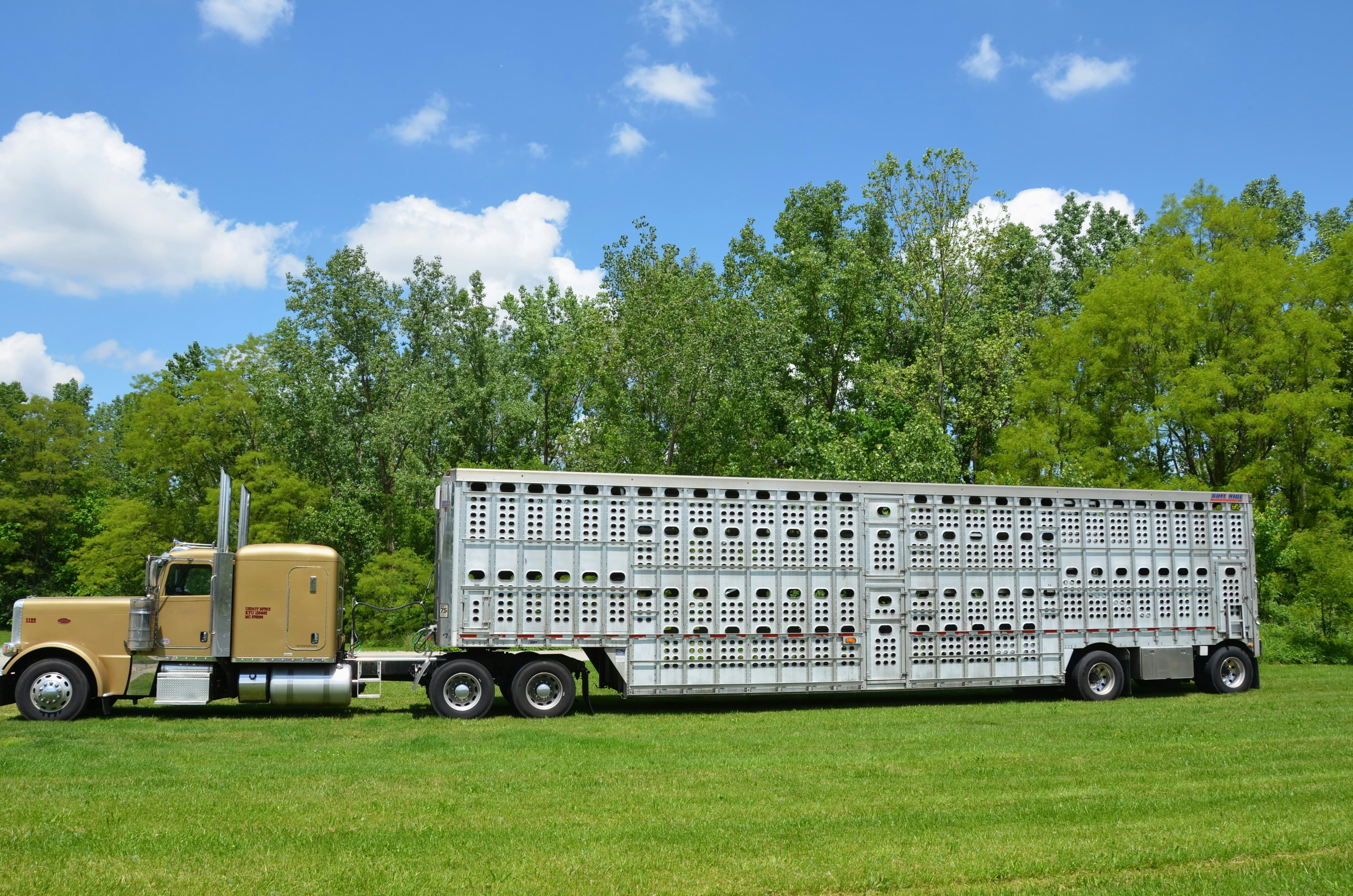
That creates a lot of truck freight: feeder cattle into feedlots, fed cattle to packing plants, feed grain and byproducts into the yards, and boxed beef out on reefers. Each piece has its own coverage question:
- Live cattle need livestock cargo coverage. See livestock hauler insurance.
- Boxed beef is temperature-controlled and high value. See reefer trucking insurance and reefer breakdown coverage.
- Grain and feed often move in hoppers and end dumps. See dump truck insurance.
TxDOT's Dumas study found trucks were 25 to 35 percent of total traffic in its field counts along US 87/US 287, which tells you how freight-heavy the roads north of Amarillo are.
| Figure | Value | Source and year |
|---|---|---|
| Cattle on feed, Texas 1,000+ head feedlots | 2.61 million head | USDA NASS, Dec. 1, 2025 |
| Truck share of traffic, US 87/US 287 Amarillo to Dumas | 25 to 35 percent | TxDOT feasibility study, 2025 |
| I-27 system share of Texas beef sales | 98.7 percent | TxDOT I-27 plan, 2021 data |
Wind, dust and hail on I-40
The Panhandle's weather is the first thing an Amarillo trucking company manages. Strong west and southwest winds in late winter and spring can lift dust from fields and drop visibility to near zero on I-40 and I-27, and TxDOT's Amarillo District has advised against travel during the worst events. High-profile trailers, especially empty vans and reefers, can be pushed off the road or blown over. Spring and summer thunderstorms bring large hail.
How that shows up in coverage:
- Rollovers and run-off-road crashes hit both physical damage and liability, and multi-vehicle dust crashes can get expensive quickly. See trucking umbrella insurance.
- Hail on parked units is a comprehensive claim, but it still affects your loss runs.
- Cargo damaged in a rollover falls under motor truck cargo insurance.
A written rule for when drivers stop in high wind or dust, and dashcam footage showing they followed it, is one of the most useful things an Amarillo fleet can show an underwriter.
Long-haul limits and filings
Amarillo fleets on I-40 are interstate carriers, so the insurer files a BMC-91X and the policy carries the MCS-90. The federal minimum for general freight is $750,000 under 49 CFR 387.9, but brokers routinely ask for $1,000,000 and some shippers ask for more. See broker-carrier agreement insurance requirements.
Potter and Randall counties are in RRC District 10, whose office is in Pampa. Oilfield work in the Panhandle is light compared with the Permian, but it exists; see oilfield trucking insurance if you haul for operators.
Common questions
Does my policy cover a trailer blown over by wind while parked?
Wind damage to a parked unit is normally a comprehensive physical damage loss, if you carry comprehensive on that unit. Trailers without physical damage coverage are not covered, so check that every trailer is scheduled.
Do I need reefer breakdown for boxed beef loads?
If you haul temperature-sensitive freight, most brokers and shippers expect it. Standard cargo forms often exclude spoilage from refrigeration failure unless reefer breakdown coverage is added.
What limits do Panhandle feedlots and packers ask for?
Requirements vary by customer and contract. Many ask for $1,000,000 auto liability and specific cargo limits for livestock or reefer loads. Send us the contract and we will compare it to your policy.
Sources
- USDA NASS: Cattle on Feed (released Dec. 19, 2025). Texas 1,000+ capacity feedlot inventory on Dec. 1, 2025.
- TxDOT: I-27 Feasibility Study, Amarillo to Dumas (July 2025). 57-mile corridor; trucks 25 to 35 percent of traffic in field counts.
- TxDOT: I-27 System in Texas Implementation Plan (2024). I-40 PHFS connection; 2021 beef sales share.
- TxDOT: I-27 System in Texas. Signed I-27 from I-40 in Amarillo to Lubbock.
- 49 CFR 387.9 (Cornell LII). Federal minimum liability schedule.
This page explains insurance, not law. Have your attorney review indemnity and contract language; our job is making the insurance match it.
Keep reading
By operation
What insurance does a Texas livestock hauler need?
By operation
What insurance does a Texas reefer carrier need?
Coverage
Reefer breakdown coverage: when a failed unit spoils the load
Coverage
Physical damage: how your own truck and trailer get paid for after a loss
Locations
What do Lubbock trucking companies need from their insurance?