The short version
- A box truck business usually needs commercial auto liability, physical damage, motor truck cargo, and general liability if drivers go inside homes or businesses to deliver, assemble or install.
- A box truck rated 10,001 lbs or more is a commercial motor vehicle under federal rules, and for-hire interstate hauling at that size requires at least $750,000 of liability under 49 CFR 387.9.
- Most box trucks under 26,001 lbs GVWR do not require a CDL, and Texas generally does not require TxDMV registration at 26,000 lbs or less unless the truck hauls placarded hazmat or household goods (movers must register at any weight).
- Texas household goods movers under 26,000 lbs need $300,000 of liability plus cargo coverage of $5,000 per vehicle and $10,000 aggregate on file with TxDMV.
Who this page is for
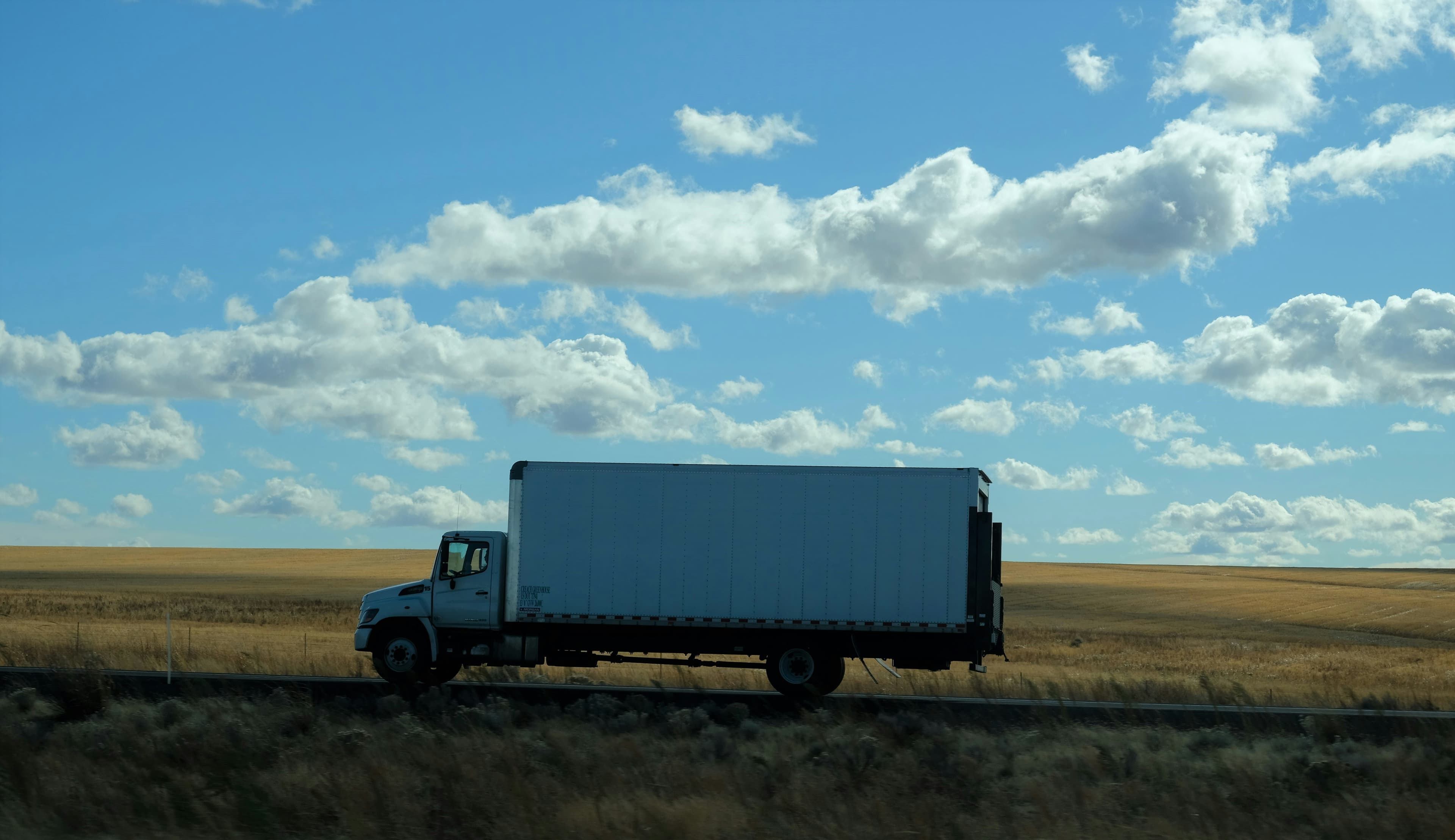
This page is for businesses running straight trucks, typically 16 to 26 feet: final-mile and last-mile delivery, appliance and furniture delivery, expedited freight, local LTL, moving and household goods, and box trucks booked through load boards and delivery platforms. Many of these operations run non-CDL drivers and grow fast, which is exactly what underwriters look at.
The rules that apply depend on three things: the truck's rating, whether you cross state lines for hire, and whether you move household goods.
Regulatory lines for box trucks
- 10,001 lbs GVWR (federal). A box truck at or above this rating is a commercial motor vehicle under 49 CFR 390.5. For-hire interstate hauling of non-hazardous property at this size requires at least $750,000 of liability under 49 CFR 387.9, filed by your insurer on a BMC-91X. Drivers must be medically certified (49 CFR 391.41).
- 26,000 lbs (TxDMV). TxDMV requires intrastate registration for vehicles over 26,000 lbs by gross weight, registered weight or rating, with $500,000 minimum liability. Most box trucks are below that line.
- Household goods (TxDMV, any weight). Texas requires household goods movers that transport for compensation to register regardless of vehicle weight. TxDMV's table sets $300,000 liability for household goods movers under 26,000 lbs and cargo coverage of $5,000 for total cargo on one vehicle and $10,000 aggregate for multiple shippers on one vehicle. Interstate household goods carriers have a parallel federal cargo requirement in 49 CFR 387.303(c).
- 26,001 lbs GVWR (CDL). A single vehicle rated 26,001 lbs or more is a Group B vehicle under 49 CFR 383.91. Box trucks rated below that generally do not require a CDL unless they haul placarded hazmat.
See the filings guide and Texas intrastate requirements.
| Situation | Minimum set by | Requirement |
|---|---|---|
| For-hire interstate, 10,001 lbs GVWR or more, general freight | 49 CFR 387.9 | $750,000 liability; BMC-91X |
| Texas intrastate, over 26,000 lbs | TxDMV | $500,000 liability; Form E |
| Texas household goods mover, under 26,000 lbs | TxDMV | $300,000 liability; cargo $5,000 per vehicle / $10,000 aggregate |
| Interstate household goods carrier | 49 CFR 387.303(c) | Cargo security $5,000 per vehicle / $10,000 at any one time and place |
| Single truck 26,001 lbs GVWR or more | 49 CFR 383.91 | Group B (Class B) CDL |
What brokers and delivery contracts usually ask for
Box truck work comes from load boards and freight brokers, retailers and furniture stores, and delivery programs that contract with small fleets. The insurance asks are similar across them, though the numbers vary and we do not publish any company's requirements:
- Auto liability at a stated limit, often above the legal minimum. See why brokers require $1 million.
- Cargo at a stated limit. See how much cargo brokers require.
- General liability, especially when drivers carry items into homes, assemble or install.
- Workers comp or occupational accident for drivers and helpers. Texas lets most private employers choose whether to carry comp, but contracts often require it. See workers comp in Texas trucking and occupational accident vs workers comp.
- Additional insured and waiver of subrogation on GL and auto for the retailer or program. See certificate holder vs additional insured.
What underwriters weigh on box truck accounts
- Driver pool and turnover. Non-CDL drivers are easier to hire, so underwriters look closely at age, experience, MVRs and how quickly drivers are added. See what drivers trucking insurance can cover.
- Route density. Urban multi-stop delivery means more backing, more tight streets and more small claims.
- Operation type. Residential delivery with in-home work, commercial dock-to-dock freight and household moving are priced differently.
- Liftgates and helpers. Loading and lifting injuries feed workers comp or occupational accident costs.
- Rented trucks. Peak-season rentals need hired auto coverage and a look at the rental agreement. See hired and non-owned auto.
- Telematics and cameras. See do dashcams lower truck insurance.
Coverage gaps specific to box truck work
Damage inside the customer's home
Auto liability covers liability from using the truck, including loading and unloading. Once the driver is inside the house scraping a floor or cracking a doorframe during installation, that is typically a general liability claim. A box truck business without GL often discovers this on its first in-home claim. See truckers general liability.
Damage to the goods you are installing
Damage to customer property in your care can fall under cargo, GL or neither, depending on the forms. GL policies commonly exclude damage to property in your care, custody or control. Ask how each policy treats goods after they leave the truck.
Unattended vehicle theft
Multi-stop delivery means the truck is often left while the driver is at the door. Cargo forms often carry an unattended vehicle exclusion or lock conditions. See what the unattended vehicle exclusion is.
Rental and borrowed trucks
A rented box truck is not on your schedule. Hired auto liability and physical damage for hired autos need to be on the policy, and the rental agreement may shift damage to you.
Household goods filings
A mover that carries general freight insurance but not the household goods cargo filing TxDMV requires is out of compliance even if the limits look right.
Where cargo coverage commonly falls short
Common questions
Do I need a CDL to drive a 26-foot box truck?
It depends on the GVWR, not the length. Under 49 CFR 383.91, a single vehicle rated 26,001 lbs or more is a Group B vehicle requiring a CDL. Some 26-foot box trucks are rated under that line and some are not, so check the label on the door jamb.
Does my box truck need a TxDMV number?
Generally only if it is over 26,000 lbs by gross weight, registered weight or rating, hauls placarded hazmat, or moves household goods for compensation. Household goods movers must register at any weight.
What insurance does a Texas moving company need?
TxDMV requires household goods movers under 26,000 lbs to file $300,000 in liability and cargo coverage of $5,000 for total cargo on one vehicle and $10,000 aggregate for multiple shippers on one vehicle. Most movers also need general liability and some form of workers protection for crews.
Does my auto policy cover damage when my driver installs an appliance?
Usually not once the work is inside the home. Auto liability is built around using the truck, including loading and unloading. Damage during installation is typically a general liability question, so a delivery business doing in-home work should carry GL.
I rent extra box trucks during peak season. Am I covered?
Only if the policy includes hired auto liability, and physical damage for hired autos if you want the rental itself covered. Check the rental agreement for what you are responsible for.
Sources
- 49 CFR 387.9 Financial responsibility, minimum levels. $750,000 for for-hire interstate non-hazardous property at 10,001 lbs or more.
- TxDMV: TxDMV Number requirements. Over-26,000 lb threshold; household goods at any weight; $300,000 HHG under 26,000 lbs; HHG cargo $5,000 / $10,000.
- 49 CFR 387.303 Security for the protection of the public. Paragraph (c): household goods cargo security amounts.
- 49 CFR 383.91 Commercial motor vehicle groups. Group B: single vehicle 26,001 lbs GVWR or more.
- 49 CFR 390.5 Definitions. Commercial motor vehicle at 10,001 lbs.
This page explains insurance, not law. Have your attorney review indemnity and contract language; our job is making the insurance match it.
Keep reading
Coverage
General liability for truckers: what it covers that your auto policy does not
Coverage
Motor truck cargo insurance: what it pays, what it leaves out, and what brokers check
Coverage
Workers’ comp for Texas trucking companies: elective, but not optional in practice
Questions
What is hired and non-owned auto coverage?
Questions
What is the unattended vehicle exclusion in cargo insurance?
By operation
What insurance does a Texas dry van carrier need to haul broker freight?