The short version
- Waco sits on I-35 roughly midway between Dallas-Fort Worth and Austin, so most Waco fleets run the same corridor as the state’s two biggest metros and price like it.
- TxDOT’s My35 Waco South project is rebuilding about three miles of I-35 from South Loop 340 to 12th Street. Construction began February 24, 2025 and is expected to finish in early 2029.
- Interstate for-hire carriers of general freight in trucks of 10,001 lbs or more need at least $750,000 in liability under 49 CFR 387.9, but most freight brokers ask for $1,000,000.
- Many Waco fleets mix long-haul van and reefer work with local dump and construction hauling. Those are different risks, and an underwriter wants each one described accurately.
Waco is an I-35 town
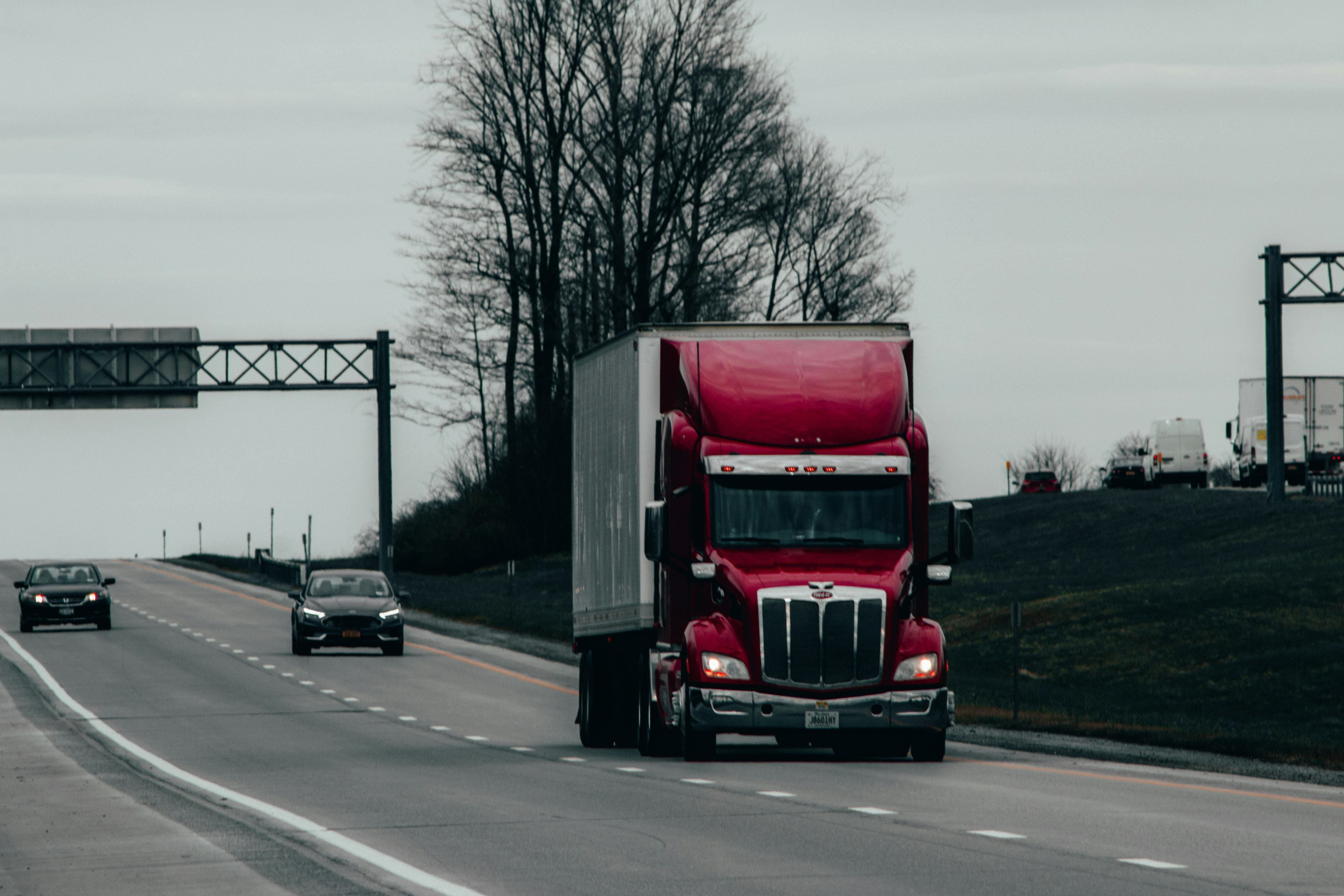
Interstate 35 runs straight through Waco, and almost everything about trucking here follows from that. A Waco carrier is a short run from the Dallas-Fort Worth distribution market to the north and Austin and San Antonio to the south. US 84 crosses the city east to west, toward Mexia and Palestine to the east and Gatesville to the west, and State Highway 6 runs southeast through Bryan-College Station toward Houston.
That geography gives Waco trucking a few common shapes:
- Long-haul and regional dry van and reefer carriers that use Waco as a cheaper yard location between the metros. See dry van trucking insurance and reefer trucking insurance.
- Dump trucks and construction hauling feeding highway, residential and commercial work along the corridor. See dump truck insurance.
- Owner-operators leased onto larger carriers, where the question is who covers what. See leasing owner-operators insurance.
Underwriters price on where the truck actually runs, not where the yard is. A Waco address with trucks spending every day in Dallas and Houston traffic will be rated on those miles. See what is radius in truck insurance.
Driving through My35 Waco South
TxDOT's My35 Waco South project covers about three miles of I-35 mainlanes and frontage roads from South Loop 340 to 12th Street, where it ties into the earlier, completed My35 Waco project. TxDOT says the work includes widening the mainlanes from six lanes to eight (four in each direction), rebuilding overpasses and frontage roads, drainage and utility work, and a diverging diamond intersection at Valley Mills Drive. Construction started on February 24, 2025, and TxDOT lists completion as early 2029.
Long work zones change the risk for every truck that passes through them, Waco-based or not:
- Rear-end exposure. Lane shifts, narrowed lanes and sudden slowdowns are where rear-end crashes happen, and a truck that hits a car from behind is usually the party that pays. That is your truck liability and, above it, your umbrella or excess.
- Physical damage. Tight lanes and barrier walls mean more scrapes, mirror strikes and side-swipes. See truck physical damage insurance.
- Evidence. A forward-facing camera is the cheapest way to show what happened in a work-zone crash. See do dashcams lower truck insurance.
TxDOT publishes traffic shifts and closures on the project page. If your dispatchers route around the work at night or use frontage roads, make sure drivers know the plan.
Filings and limits for Waco carriers
Most Waco fleets cross state lines at least occasionally, and many also run Texas-only loads. The filings that come with each:
- Interstate for-hire. Your insurer files proof of coverage with FMCSA (the BMC-91X), and the policy carries the MCS-90 endorsement.
- Texas intrastate. Your insurer files a Form E with TxDMV. See Texas intrastate truck insurance requirements.
Federal minimums are set in 49 CFR 387.9. For context, here is the schedule as published:
| Type of carriage | Minimum |
|---|---|
| For-hire, nonhazardous property | $750,000 |
| Oil and certain listed hazardous materials | $1,000,000 |
| Certain hazardous substances in bulk | $5,000,000 |
| Certain bulk explosives, under 10,001 lbs, interstate | $5,000,000 |
The minimum is rarely the real requirement
Brokers and shippers set their own limits in the contract. If a Waco carrier is rejected at onboarding, the problem is usually a limit, a missing endorsement or a name mismatch, not the federal filing. See /carrier-packet-insurance-rejected.
What we look at for a Waco account
When a Waco carrier sends us a policy and a contract, we check:
- Operations described correctly. A company that hauls dry van on I-35 three days a week and runs end dumps locally the other two needs both on the application.
- Scheduled units and drivers. Every power unit, trailer and driver the business actually uses. See scheduled auto vs any auto.
- Cargo terms. Reefer breakdown, unattended vehicle conditions and commodity exclusions. See motor truck cargo insurance.
- Contract match. Whether the policy satisfies your broker-carrier agreement.
If your renewal jumped, start with why trucking insurance renewals increase.
Common questions
Does I-35 construction in Waco affect my insurance rate?
Not directly. Underwriters do not add a surcharge for a work zone. What affects the rate is your loss history, and work zones are where rear-end and side-swipe losses happen. Driver training and dashcams are how you keep those losses off your loss runs.
I run dump trucks locally and a van truck on I-35. Can that be on one policy?
Often yes, but each operation has to be disclosed with its own radius, commodity and units. A policy written for local dump work can leave a long-haul van truck misclassified, which is a problem at claim time.
Do I need a Form E if I only haul inside Texas?
Texas intrastate for-hire carriers register with TxDMV, and the insurer files proof of coverage on Form E. Interstate carriers use the federal BMC-91X instead. Many Waco carriers need both.
Sources
- TxDOT: I-35 Waco South. Project limits, scope, Feb. 24, 2025 start and early 2029 completion.
- 49 CFR 387.9 (Cornell LII). Federal minimum liability schedule.
This page explains insurance, not law. Have your attorney review indemnity and contract language; our job is making the insurance match it.
Keep reading
By operation
What insurance does a Texas dry van carrier need to haul broker freight?
By operation
What insurance does a Texas dump truck operation need?
Coverage
Primary truck liability: what it covers, what the law requires, and where it breaks
Questions
What is a Texas Form E?
Contracts and deadlines
A broker sent me a carrier agreement. What insurance does it actually require?